
Leadership has always been represented through symbols. Long before modern governments, corporations, or institutions existed, people relied on animals, royal insignia, sacred objects, and natural elements to identify those entrusted with guiding others. These symbols appeared on crowns, banners, temples, military standards, and ceremonial artifacts because they communicated authority, wisdom, responsibility, and influence without the need for words. Today, many of these ancient symbols continue to represent leadership across cultures, organizations, and traditions.
Leadership symbols are visual representations of authority, guidance, wisdom, courage, and influence. Some of the most recognized examples include the lion, eagle, crown, wolf, scepter, compass, lighthouse, and oak tree. Across different cultures, these symbols have been used to identify rulers, protectors, visionaries, and individuals trusted to lead communities toward a common goal.
Related Post: Autumn Symbols
Most Powerful Leadership Symbols
| Symbol | Associated With | Historical Use |
| Lion | Authority | Royal emblems |
| Eagle | Vision | Empires and nations |
| Crown | Legitimate leadership | Monarchies |
| Wolf | Guidance | Tribal traditions |
| Compass | Direction | Navigation and exploration |
| Lighthouse | Guidance | Maritime traditions |
| Oak Tree | Stability | Celtic symbolism |
| Scepter | Authority | Royal courts |
How We Selected These Leadership Symbols
This collection includes symbols that have documented associations with authority, governance, guidance, wisdom, protection, or influence in mythology, heraldry, religion, folklore, military traditions, and historical records. Modern corporate icons and generic motivational imagery were intentionally excluded to maintain symbolic accuracy.
Animal Leadership Symbols
Lion
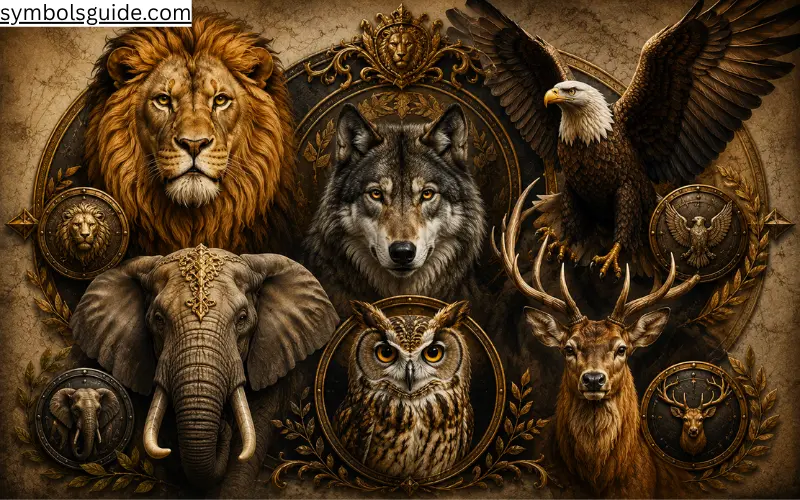
Few symbols have represented leadership as consistently as the lion. Ancient rulers across Africa, Asia, and Europe adopted lion imagery to project authority and confidence. Lions appeared on royal seals, palace entrances, military banners, and coats of arms because their commanding presence communicated strength without explanation. Unlike many animals admired for physical power alone, the lion became associated with rulership itself. Even today, governments, institutions, and organizations continue to use lion imagery when they want to convey leadership, prestige, and influence.
Eagle
Roman legions marched beneath eagle standards, medieval kingdoms placed eagles on their banners, and modern nations still feature them on official emblems. The eagle earned this status because of its remarkable perspective. Flying higher than most birds, it became a natural representation of individuals expected to see opportunities and threats before others. Throughout history, the eagle has symbolized authority paired with foresight, making it one of the most enduring leadership symbols in the world.
Wolf
Unlike symbols rooted in kingship or status, the wolf gained its reputation through cooperation and social structure. Many Indigenous traditions, European legends, and tribal cultures viewed wolves as examples of organized leadership because of their ability to work together while protecting the group. Their symbolism often reflects guidance, loyalty, and responsibility. Rather than representing domination, the wolf highlights the importance of maintaining unity and direction within a community.
Elephant
Across India, Southeast Asia, and parts of Africa, elephants became symbols of respected authority. Their intelligence, strong memory, and protective behavior contributed to this reputation. Historical leaders frequently associated themselves with elephants because the animal projected wisdom and stability. In royal processions and ceremonial traditions, elephants often appeared as symbols of dignified leadership, reflecting influence earned through experience rather than force.
Falcon
The falcon occupies an important place in ancient Egyptian symbolism, where it was closely connected to rulership and divine authority. Its ability to focus intensely on a target made it a symbol of precision and purposeful action. Ancient leaders admired the falcon’s discipline and awareness, qualities that helped establish its connection to leadership. Over time, falcon imagery spread into military and noble traditions throughout the Middle East and Europe.
Bear
Northern European folklore, Indigenous traditions, and Siberian cultures all viewed the bear as a figure worthy of respect. Unlike symbols associated with constant action, the bear became admired for its restraint. It possesses immense strength but rarely wastes energy unnecessarily. This balance between power and control transformed the bear into a symbol associated with dependable leadership and protective authority.
Tiger
The tiger has appeared in royal art, military insignia, and cultural traditions throughout Asia for centuries. Its symbolism is rooted in confidence and determination. Historical leaders often adopted tiger imagery to project courage and independence. Because of its reputation as a fearless predator, the tiger became associated with individuals capable of confronting challenges directly while maintaining authority during uncertain times.
Buffalo
For many Indigenous communities across North America, the buffalo represented far more than survival. Entire societies depended upon it for food, shelter, and resources, creating a deep symbolic connection between the animal and responsibility. Because of its importance to community well-being, the buffalo became associated with leadership built on service, stewardship, and collective care rather than personal status.
Owl
Long before it became a modern symbol of knowledge, the owl appeared in ancient mythology and philosophy as a representation of wisdom. The Greeks famously connected the owl with Athena, a figure associated with intelligence and strategic judgment. Its ability to navigate darkness reinforced its symbolic connection to insight and careful decision-making, qualities that have long been valued in respected leaders.
Raven
Ravens appear throughout Norse mythology, Celtic folklore, and Indigenous traditions. Their reputation comes from intelligence, adaptability, and observation. Historical stories often portrayed ravens as messengers, advisors, or guardians of knowledge. These associations helped transform the bird into a symbol linked with strategic awareness and thoughtful leadership.
Stag
Throughout European heraldry and Celtic mythology, the stag symbolized dignity and noble authority. Its impressive antlers and commanding appearance made it a frequent feature on noble crests and ceremonial artwork. Unlike more aggressive leadership symbols, the stag became associated with maturity, guidance, and the ability to lead through presence rather than force.
Crane
In East Asian traditions, cranes are admired for their grace, discipline, and longevity. Their symbolism extends beyond beauty, representing wisdom earned through patience and experience. Historical artwork often linked cranes with respected officials, scholars, and spiritual leaders. Because of these associations, the crane became a symbol of thoughtful leadership grounded in self-control and long-term vision.
Orca
Among several Pacific Northwest Indigenous cultures, the orca occupies an important symbolic role. Its highly organized social structure and strong family bonds contributed to its association with leadership and protection. Orcas often represent the balance between strength and community responsibility, making them one of the most distinctive leadership symbols found in nature.
Ram
Ancient civilizations frequently associated rams with authority and determination. Their willingness to confront obstacles head-on made them powerful symbols in royal and military traditions. Ram imagery appeared in temples, ceremonial objects, and leadership emblems because it reflected initiative and unwavering resolve.
Horse
Throughout history, horses carried kings, generals, explorers, and rulers across continents. Their importance in warfare, transportation, and governance naturally elevated their symbolic status. Beyond movement itself, the horse came to represent progress, ambition, and the ability to lead others toward a destination.
Hawk
Sharp vision and unwavering focus helped establish the hawk as a symbol of awareness and vigilance. Many cultures viewed hawks as guardians capable of identifying opportunities and dangers long before others noticed them. This connection to observation and preparedness made the hawk a respected symbol of leadership throughout history.
Royal and Ancient Leadership Symbols
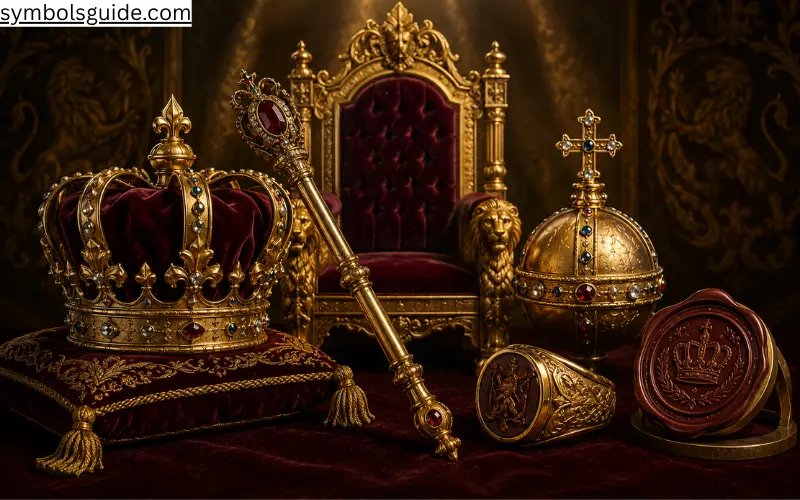
While animals often represent natural leadership qualities, many of history’s most influential leadership symbols emerged from royal courts, military traditions, and ancient civilizations. These symbols were reserved for rulers, commanders, judges, and individuals entrusted with governing communities. Their importance extended beyond decoration, serving as visible reminders of authority, responsibility, and public trust.
Crown
Few symbols are as universally connected to leadership as the crown. Ancient Egypt, Persia, Rome, China, and medieval Europe all developed distinctive crown designs, yet the message remained remarkably consistent. Crowns identified individuals entrusted with ruling kingdoms, protecting territories, and making decisions that affected entire populations. Whether adorned with gold, feathers, jewels, or precious metals, the crown communicated recognized authority. Because of this long association with rulership, it remains one of the most enduring leadership symbols ever created.
Scepter
Long before modern governments introduced official offices and titles, rulers carried scepters as visible signs of their authority. These ceremonial staffs appeared in royal courts throughout Europe, Africa, Asia, and the Middle East. Unlike weapons designed for battle, the scepter represented the right to govern and maintain order. Many cultures also viewed it as a symbol of wisdom and responsibility, reinforcing the idea that leadership involved guidance as much as power.
Throne
The throne has symbolized leadership for thousands of years because it served as the physical seat of authority. Ancient kings, emperors, tribal chiefs, and rulers often conducted important ceremonies and decisions from their thrones. Beyond status, the throne represented governance itself. It reminded both rulers and citizens that leadership carried obligations, accountability, and responsibility for the well-being of an entire community.
Royal Seal
A royal seal carried legal and symbolic importance throughout history. Official decrees, treaties, and government documents often required a seal to confirm authenticity and authority. Because it represented trusted leadership rather than personal opinion, the royal seal became a symbol of legitimacy, credibility, and institutional power. Its influence extended across kingdoms and empires where leadership depended on public recognition and trust.
Signet Ring
For centuries, rulers and influential figures used signet rings to authenticate letters, laws, and agreements. Each ring carried a unique design that identified its owner and confirmed the legitimacy of official documents. Beyond its practical purpose, the signet ring became a symbol of accountability and trusted leadership. Possessing one signified responsibility, influence, and recognized authority within a society.
Royal Orb
The royal orb appeared in coronation ceremonies throughout Europe as a symbol of sovereign authority. Typically featuring a globe topped with a cross or sacred emblem, it represented a ruler’s responsibility over a kingdom or empire. Unlike crowns that identified leadership visually, the orb emphasized stewardship and governance. Its symbolism connected leadership with duty, order, and the protection of those under a ruler’s care.
King’s Standard
Throughout history, kings and monarchs marched beneath standards bearing their personal insignia. These standards helped armies identify leadership during battles and served as symbols of legitimacy during public ceremonies. Because they represented the ruler rather than the nation alone, king’s standards became powerful symbols of recognized authority and leadership.
Banner
Banners have united armies, kingdoms, and communities for centuries. Whether carried into battle or displayed during important events, banners created a sense of shared identity and purpose. Their symbolism reflects leadership’s ability to gather individuals around a common cause. Many historical banners became so closely associated with leaders that they represented authority even in the ruler’s absence.
Standard Flag
Unlike decorative banners, standard flags often represented official leadership, military command, or state authority. Roman legions, medieval armies, and royal households all relied on standards to establish order and direction. Because people rallied around these symbols during times of conflict and uncertainty, standard flags became enduring representations of leadership and unity.
Lion Throne
The lion throne combines two powerful symbols of authority. Throughout Asia, Africa, and Europe, thrones decorated with lions represented rulers whose authority was expected to be both respected and protected. Lion thrones frequently appeared in royal palaces and ceremonial artwork, reinforcing connections between leadership, courage, and sovereignty.
Royal Leadership Symbols at a Glance
| Symbol | Historical Connection | Why It Became a Leadership Symbol |
| Crown | Monarchies | Recognized authority |
| Scepter | Royal courts | Governance and responsibility |
| Throne | Kingdoms and empires | Seat of leadership |
| Royal Seal | Official decrees | Legitimacy |
| Signet Ring | Authentication | Trust and accountability |
| Royal Orb | Coronation ceremonies | Stewardship |
| King’s Standard | Monarchs and armies | Authority |
| Banner | Kingdoms and tribes | Unity |
| Standard Flag | Military leadership | Direction |
| Lion Throne | Royal palaces | Sovereignty |
Ancient Leadership Symbols
Laurel Wreath
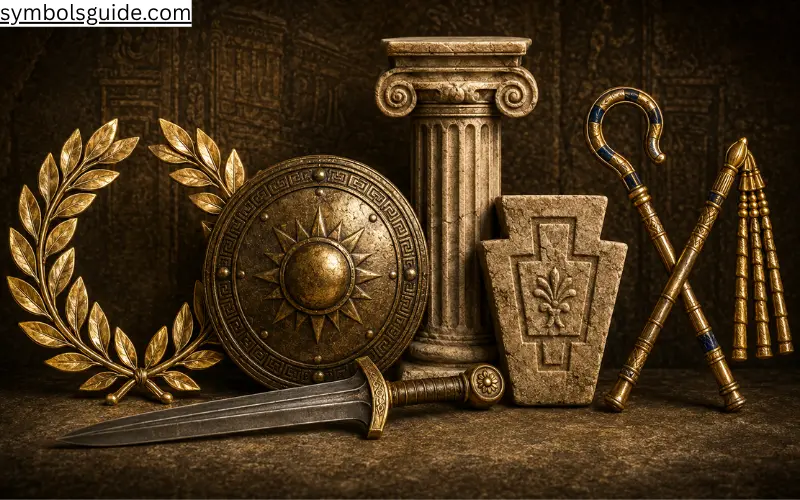
Victorious leaders in Ancient Greece and Rome often received laurel wreaths as marks of honor and achievement. Unlike inherited symbols of authority, the laurel wreath represented leadership earned through accomplishment. Generals, statesmen, and champions wore these wreaths to signify public respect and recognized success. Over time, the laurel became one of history’s most enduring symbols of distinguished leadership.
Shield
Across countless civilizations, shields represented protection and responsibility. Leaders were often expected to defend their people, values, and territories, making the shield a natural symbol of leadership. Ancient artwork, military insignia, and heraldic traditions frequently featured shields to emphasize guardianship and duty rather than aggression.
Sword
Although swords are commonly associated with warfare, their symbolism extends far beyond combat. Ceremonial swords appeared in coronations, royal courts, and military traditions as representations of justice, authority, and decisive leadership. Many cultures viewed the sword as a reminder that leaders must be willing to act when circumstances require difficult decisions.
Pillar
Ancient temples, palaces, and public buildings relied on pillars for structural support. Because of this role, pillars became symbols of stability and reliability. Leadership symbolism connected to pillars emphasizes the ability to support others and remain dependable during periods of uncertainty.
Keystone
Architecturally, the keystone is the central stone that holds an arch together. Although it may appear ordinary, its removal can cause an entire structure to collapse. This symbolism reflects leadership that quietly supports and strengthens a larger group. Many communities have used the keystone as a representation of individuals whose influence holds everything together.
Torch
For thousands of years, torches illuminated paths, ceremonies, and gatherings. Their connection to light naturally linked them with knowledge, inspiration, and guidance. Ancient civilizations often used torch imagery to represent individuals who introduced new ideas or helped others navigate uncertainty.
Watchtower
Long before modern surveillance and communication systems existed, watchtowers provided early warnings of approaching threats. Their elevated position made them symbols of awareness and preparedness. In leadership symbolism, watchtowers represent vigilance and the ability to recognize challenges before they become serious problems.
Command Baton
Military commanders and high-ranking officials often carried ceremonial batons as visible signs of authority. Unlike weapons, batons symbolized leadership itself. Receiving a command baton usually signified trust, achievement, and responsibility for guiding others.
Crook and Flail
Among the most recognizable symbols of ancient Egyptian leadership, the crook and flail appeared in the hands of pharaohs for centuries. Together, these objects represented two essential responsibilities of leadership: guidance and provision. Their consistent appearance in royal imagery helped establish them as enduring symbols of authority and governance.
Pharaoh’s Crook
The crook originated as a shepherd’s tool before becoming one of the defining symbols of Egyptian kingship. Its transformation reflected an important idea: leaders should guide and protect their people just as shepherds care for their flocks. This symbolism connected leadership with responsibility rather than domination alone.
Ancient Leadership Symbols Overview
| Symbol | Traditional Meaning |
| Laurel Wreath | Achievement |
| Shield | Protection |
| Sword | Authority |
| Pillar | Stability |
| Keystone | Support |
| Torch | Inspiration |
| Watchtower | Vigilance |
| Command Baton | Leadership |
| Crook and Flail | Governance |
| Pharaoh’s Crook | Guidance |
Nature, Guidance, and Spiritual Leadership Symbols

Many leadership symbols were never connected to crowns, armies, or political power. Instead, they emerged from nature, navigation, spirituality, and everyday life. These symbols became important because they reflected qualities people admired in respected leaders, including wisdom, stability, guidance, endurance, and the ability to help others navigate uncertainty.
Oak Tree
For centuries, the oak tree has been admired for its remarkable strength and longevity. Some oaks survive for hundreds of years, standing firm through storms that destroy weaker trees. This resilience made the oak a respected symbol in Celtic traditions, European folklore, and royal heraldry. Its deep roots and powerful trunk came to represent dependable leadership, stability, and the ability to provide support during difficult times.
Cedar of Lebanon
Few trees carry the historical significance of the Cedar of Lebanon. Ancient civilizations prized its wood for temples, palaces, and monumental structures because of its durability and resistance to decay. Over time, the tree became associated with endurance, prestige, and lasting influence. Leaders were often compared to cedars because they were expected to leave a legacy that would outlive their own generation.
Mountain
Mountains have symbolized strength and achievement throughout human history. Their towering presence inspired countless myths, religious traditions, and cultural stories. Unlike temporary symbols of power, mountains represent permanence and perspective. Because they rise above the surrounding landscape, they became associated with individuals capable of maintaining a broader view while remaining steady during periods of uncertainty.
Sun
Ancient rulers frequently connected themselves to the sun because it represented life, consistency, and influence. Egyptian pharaohs, Roman emperors, and numerous monarchies adopted solar imagery to reinforce their authority. The sun’s daily presence made it a natural symbol of reliability, while its ability to illuminate entire landscapes connected it with visibility and leadership.
Banyan Tree
The banyan tree is known for its vast network of roots and branches, creating natural shelters that can span enormous areas. In many Asian traditions, it became a symbol of wisdom, support, and community. Its structure reflects a leadership style that encourages growth while providing stability. Rather than standing alone, the banyan expands outward, supporting countless connections beneath its canopy.
River
Rivers have inspired symbolic meaning in cultures around the world because they continue moving despite obstacles. When blocked, a river adapts rather than stopping entirely. This characteristic made rivers symbols of persistence, flexibility, and progress. Their ability to sustain entire communities also contributed to their association with guidance and long-term influence.
Nature Leadership Symbols Overview
| Symbol | Historical Association | Leadership Connection |
| Oak Tree | Celtic traditions | Stability |
| Cedar of Lebanon | Ancient kingdoms | Endurance |
| Mountain | Sacred landscapes | Perspective |
| Sun | Royal symbolism | Influence |
| Banyan Tree | Eastern traditions | Support |
| River | Global cultures | Adaptability |
Symbols of Direction and Guidance
Compass
Long before satellites and digital maps existed, explorers depended on the compass to navigate unfamiliar territory. Because it consistently pointed toward a reliable direction, it became one of history’s strongest symbols of guidance. Its symbolism extends beyond travel, representing clarity, purpose, and the ability to maintain direction even when circumstances become confusing.
Lighthouse
Standing along dangerous coastlines, lighthouses have guided sailors for centuries. Unlike symbols associated with command or authority, the lighthouse represents leadership through guidance. It does not force ships to follow a specific route; it simply provides clarity when visibility is limited. This unique role helped establish the lighthouse as one of the most meaningful symbols of leadership and responsibility.
North Star
Travelers relied on the North Star long before modern navigation systems existed. Because it remained relatively fixed in the night sky, it became a symbol of consistency and dependable direction. Across cultures, the North Star represented guidance during uncertainty and the importance of remaining aligned with enduring principles.
Beacon Fire
Beacon fires once served as vital communication systems, warning communities of danger and helping travelers find their way. Their visibility across great distances made them symbols of awareness and preparedness. Leadership symbolism associated with beacon fires often reflects the ability to provide direction during challenging circumstances.
Lantern
Unlike large beacons intended for distant audiences, lanterns illuminate the immediate path ahead. This practical role gave them symbolic connections to wisdom, clarity, and personal guidance. Leaders associated with lantern symbolism are often viewed as individuals who help others navigate everyday challenges rather than only major crises.
Bridge
Bridges connect places that would otherwise remain separated. Throughout history, they enabled trade, communication, and cultural exchange. As a symbol, the bridge represents connection and cooperation. Its leadership associations come from the ability to bring people together despite differences, creating opportunities where barriers once existed.
Guidance Symbols at a Glance
| Symbol | Traditional Meaning |
| Compass | Direction |
| Lighthouse | Guidance |
| North Star | Consistency |
| Beacon Fire | Awareness |
| Lantern | Clarity |
| Bridge | Connection |
Spiritual Leadership Symbols
Tree of Life
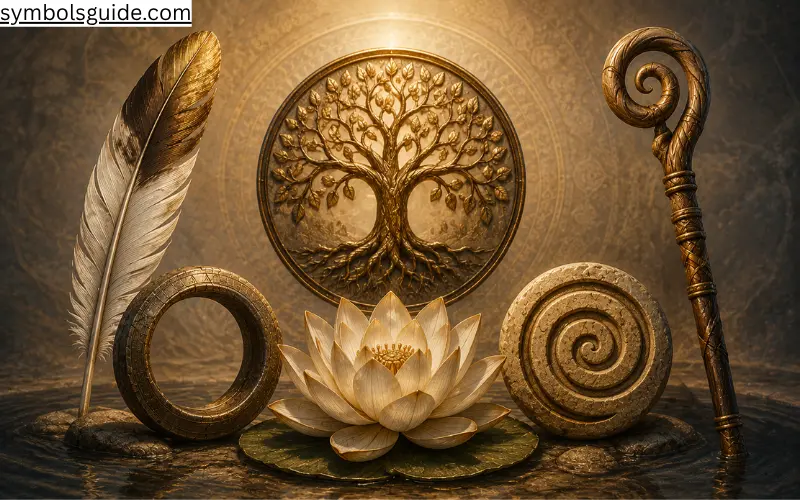
Appearing in cultures from Ancient Egypt to Norse mythology, the Tree of Life remains one of the world’s most recognized spiritual symbols. Its branches reach upward while its roots extend deep into the earth, creating a powerful image of balance and interconnectedness. Because it supports countless forms of life, the symbol became associated with wisdom, growth, and the ability to sustain an entire community.
Lotus
The lotus gained symbolic importance because of its unusual life cycle. Emerging from muddy water before blooming above the surface, it became a representation of resilience and transformation. In many spiritual traditions, the lotus reflects growth achieved through adversity, making it a meaningful symbol of respected and enduring leadership.
Eagle Feather
Within many Indigenous traditions, eagle feathers carry profound cultural significance. They are often associated with honor, achievement, and earned respect. Because feathers were traditionally awarded for acts of courage or service, they became symbols connected to leadership rooted in integrity and responsibility.
Circle
The circle appears throughout human history as one of the simplest yet most meaningful symbols. Without a beginning or end, it represents unity, continuity, and equality. Many cultures used circles in ceremonies and governance because they emphasized shared participation rather than hierarchy alone.
Spiral
Spirals can be found in ancient stone carvings, sacred art, seashells, and even galaxies. Their recurring appearance in nature helped establish them as symbols of growth and ongoing development. Unlike straight lines, spirals suggest continuous progress through experience and learning.
Staff
The staff originated as a practical tool used by shepherds, travelers, and spiritual leaders. Over time, it evolved into a symbol of guidance and responsibility. Religious figures, tribal elders, and rulers often carried staffs as visible reminders of their role in directing and protecting others.
Key
Throughout history, keys represented access and trust. Important individuals were often entrusted with keys to cities, sacred buildings, or valuable resources. This connection transformed the key into a symbol of opportunity, responsibility, and leadership built upon confidence and accountability.
Wheel
The wheel revolutionized transportation and communication, making it one of humanity’s most influential inventions. Symbolically, it represents movement, continuity, and progress. Because successful leadership often requires maintaining forward momentum, the wheel became closely associated with growth and advancement.
Spiritual Leadership Symbols Overview
| Symbol | Symbolic Association |
| Tree of Life | Growth |
| Lotus | Transformation |
| Eagle Feather | Honor |
| Circle | Unity |
| Spiral | Development |
| Staff | Guidance |
| Key | Opportunity |
| Wheel | Progress |
Mythological and Cultural Leadership Symbols
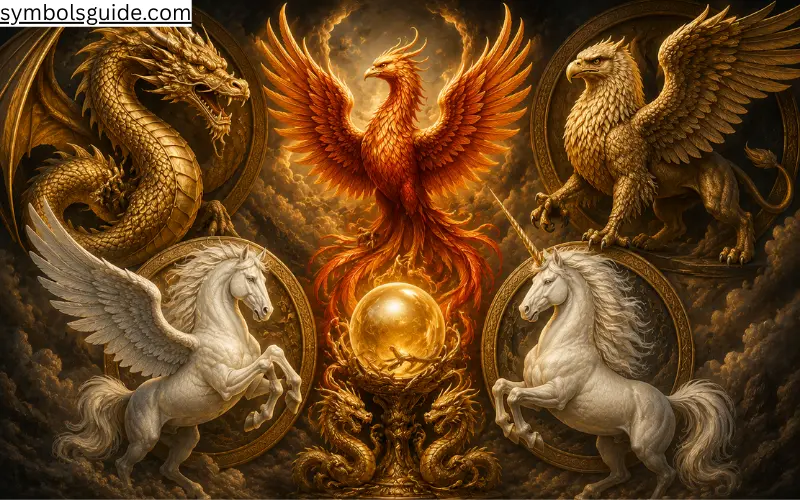
Some of the world’s most influential leadership symbols emerged from mythology, sacred traditions, and ancient civilizations. Unlike royal insignia or natural symbols, these emblems often carried deeper meanings connected to wisdom, destiny, authority, protection, and the responsibilities of leadership.
Dragon
Few symbols have held positions of authority for as long as the dragon. In East Asian traditions, dragons were closely associated with emperors, prosperity, and divine rulership. Imperial robes, palaces, and ceremonial objects frequently featured dragon imagery to emphasize legitimate authority. Unlike many Western interpretations that portray dragons as destructive creatures, Eastern traditions often viewed them as wise guardians whose power was balanced by wisdom and responsibility.
Phoenix
The phoenix remains one of the most recognizable symbols of renewal. According to legend, it rises from its own ashes after destruction, beginning a new cycle of life. Because of this story, the phoenix became associated with resilience, recovery, and the ability to emerge stronger after adversity. Leaders and institutions have often adopted phoenix imagery to represent endurance through periods of challenge and transformation.
Griffin
Combining the body of a lion with the head and wings of an eagle, the griffin unites two of history’s most respected leadership symbols. Ancient civilizations viewed griffins as guardians of treasure, sacred places, and royal authority. Their symbolism reflects a balance between courage and vision, making them enduring emblems of leadership and protection.
Pegasus
Pegasus occupies a unique place in mythology because it represents aspiration and higher purpose. Ancient stories often connected Pegasus with heroes, creativity, and divine inspiration. Its ability to soar above the earth transformed it into a symbol of ambitious leadership and the pursuit of goals that extend beyond ordinary expectations.
Unicorn
Medieval rulers frequently incorporated unicorns into coats of arms and royal symbolism. While modern interpretations often emphasize purity, historical traditions associated unicorns with integrity, honor, and noble character. Their symbolism reflects leadership built on trust and ethical conduct rather than force alone.
World Tree
Appearing in several mythological traditions, particularly Norse mythology, the World Tree symbolized connection between different realms of existence. Its immense structure linked heaven, earth, and the spiritual world. Because it served as a unifying force, the World Tree became associated with stability, wisdom, and leadership that supports an entire community.
Golden Fleece
The Golden Fleece occupies a central place in Greek mythology as the object sought by Jason and the Argonauts. Its symbolism extends beyond treasure, representing achievement, ambition, and the pursuit of extraordinary goals. Because obtaining the fleece required courage, strategy, and perseverance, it became associated with leadership through accomplishment.
Dragon Pearl
Often depicted alongside dragons in Chinese art and mythology, the dragon pearl symbolizes wisdom, enlightenment, and authority. Ancient traditions viewed it as a representation of knowledge and spiritual power. Its connection to dragons strengthened its association with respected and influential leadership.
Mythological Leadership Symbols Overview
| Symbol | Traditional Association |
| Dragon | Authority |
| Phoenix | Renewal |
| Griffin | Protection |
| Pegasus | Aspiration |
| Unicorn | Integrity |
| World Tree | Stability |
| Golden Fleece | Achievement |
| Dragon Pearl | Wisdom |
Cultural Leadership Symbols
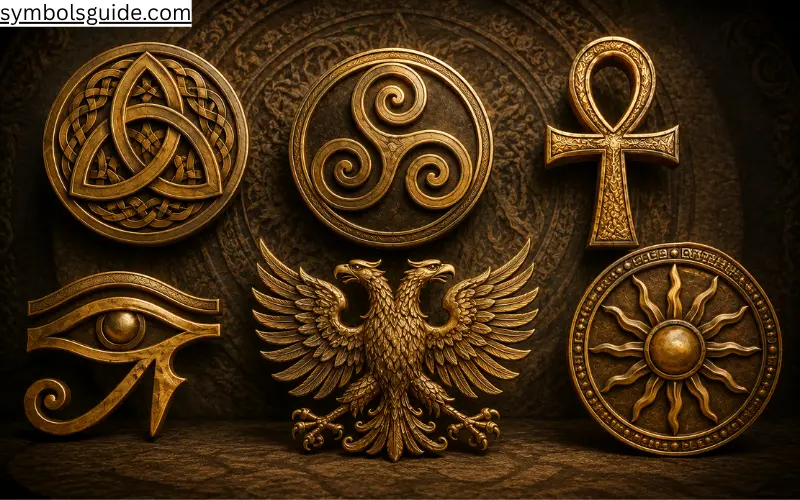
Celtic Knot
The Celtic knot is one of the most recognizable symbols in Celtic tradition. Its continuous lines, with no obvious beginning or end, represent continuity and enduring strength. Because of its association with interconnectedness and resilience, the symbol became linked with leadership that values long-term commitment and responsibility.
Triskelion
The triskelion consists of three interconnected spirals radiating from a central point. Found throughout Celtic and ancient European cultures, it represents movement, balance, and progress. Its symbolism reflects the ability to adapt while maintaining stability, qualities often associated with effective leadership.
Ankh
Ancient Egyptians regarded the ankh as a symbol of life and enduring influence. Pharaohs and deities frequently appeared holding ankhs in temple carvings and artwork. Its association with vitality and continuity helped establish it as a symbol connected to leadership and guardianship.
Eye of Horus
One of Ancient Egypt’s most recognizable symbols, the Eye of Horus represented protection, awareness, and wisdom. It appeared on monuments, jewelry, and ceremonial objects as a safeguard against harm. Because leadership often required vigilance and sound judgment, the symbol became closely associated with responsible authority.
Double-Headed Eagle
The double-headed eagle appeared in the Byzantine Empire, the Holy Roman Empire, and several other historic states. Facing in two directions simultaneously, it represented the ability to oversee multiple regions, responsibilities, or interests. Its symbolism reflects broad vision and strategic leadership.
Sun Wheel
Found in numerous European traditions, the sun wheel symbolizes continuity, order, and enduring strength. Its circular design reflects cycles of renewal and stability. Because societies often linked solar imagery with authority, the sun wheel became associated with leadership and governance.
Imperial Seal
Empires throughout history relied on official seals to authenticate laws, decrees, and governmental decisions. The imperial seal represented recognized authority rather than individual power. Its symbolism emphasizes legitimacy, responsibility, and leadership supported by established institutions.
Dragon Throne
The Dragon Throne served as a powerful symbol of imperial authority in China. More than a physical seat, it represented the office of the emperor and the responsibilities associated with governing a vast realm. Because of its connection to dragons, wisdom, and sovereignty, it became one of history’s most significant leadership symbols.
Cultural Leadership Symbols Overview
| Symbol | Historical Significance |
| Celtic Knot | Enduring strength |
| Triskelion | Progress |
| Ankh | Life and continuity |
| Eye of Horus | Wisdom |
| Double-Headed Eagle | Strategic vision |
| Sun Wheel | Stability |
| Imperial Seal | Legitimacy |
| Dragon Throne | Sovereignty |
See Also
- 65+ Guitar TAB Symbols and Meanings Every Player Knows
- 67+ Historic Anti-Fascist Resistance Symbols and Meanings
- 75+ Essential Calculus Symbols and Meanings Explained
- Unbreakable Friendship Symbols and Meanings: 101+ Signs
- 77+ Autumn Symbols: Meanings, Myths & Traditions
FAQs
What is the strongest symbol of leadership?
The lion is widely considered the strongest leadership symbol because it has represented authority, rulership, and confidence across countless cultures for centuries.
Which animal best represents leadership?
The lion, eagle, wolf, elephant, and owl are among the most recognized animal leadership symbols. Each reflects a different aspect of leadership, including authority, vision, unity, wisdom, and guidance.
Why is the crown a leadership symbol?
Crowns were historically reserved for kings, queens, emperors, and rulers. Because they visually identified recognized authority, they became universal symbols of leadership and governance.
What symbol represents visionary leadership?
The eagle, compass, lighthouse, and North Star are frequently associated with vision and guidance because they emphasize perspective and direction.
Which leadership symbol represents wisdom?
The owl, elephant, Tree of Life, Eye of Horus, and dragon pearl are commonly associated with wisdom and thoughtful decision-making.
What ancient symbol represents leadership?
The crown, scepter, throne, royal seal, laurel wreath, and crook and flail are among the oldest symbols associated with leadership and authority.
What leadership symbol represents strength?
The lion, dragon, mountain, oak tree, and bear are some of the strongest symbols connected to strength and leadership.
Why are leadership symbols important?
Leadership symbols communicate complex ideas through simple visual imagery. They help represent authority, wisdom, responsibility, courage, and guidance across different cultures and historical periods.
Leadership Symbols Comparison
| Symbol | Primary Meaning | Category |
| Lion | Authority | Animal |
| Eagle | Vision | Animal |
| Crown | Leadership | Royal |
| Compass | Direction | Guidance |
| Lighthouse | Guidance | Guidance |
| Oak Tree | Stability | Nature |
| Tree of Life | Growth | Spiritual |
| Dragon | Authority | Mythological |
| Phoenix | Renewal | Mythological |
| Imperial Seal | Legitimacy | Cultural |
Conclusion
Leadership symbols have appeared in nearly every civilization, from ancient kingdoms and tribal societies to mythological traditions and spiritual teachings. While these symbols differ in origin and appearance, they often reflect the same qualities: wisdom, authority, courage, responsibility, vision, and guidance.
From the lion and eagle to the crown, compass, dragon, and Tree of Life, each symbol offers a unique perspective on leadership. Together, these 72+ leadership symbols reveal how cultures throughout history have visualized the qualities they value most in those entrusted with leading others.