
Healing symbols appear in ancient religions, spiritual traditions, sacred geometry, and cultural practices worldwide. Many are associated with restoration, protection, renewal, balance, and personal growth. Some of the most recognized examples include the Ankh, Eye of Horus, Rod of Asclepius, Lotus, Tree of Life, Hamsa, and Flower of Life.
Healing symbols have appeared in ancient cultures, spiritual traditions, and sacred practices for thousands of years. From the Ankh and Lotus to the Tree of Life and Hamsa, these symbols are often associated with renewal, protection, balance, and well-being. Here are some of the most recognized healing symbols from around the world.
Related Post: Timeless Leadership Symbols
Most Powerful Healing Symbols at a Glance
| Symbol | Common Association | Origin |
| Ankh | Life and vitality | Ancient Egypt |
| Eye of Horus | Restoration | Ancient Egypt |
| Rod of Asclepius | Medicine | Ancient Greece |
| Lotus | Renewal | Eastern Traditions |
| Tree of Life | Balance | Multiple Cultures |
| Hamsa | Protection | Middle East |
| Flower of Life | Harmony | Sacred Geometry |
| Phoenix | Rebirth | Mythology |
Ancient Healing Symbols
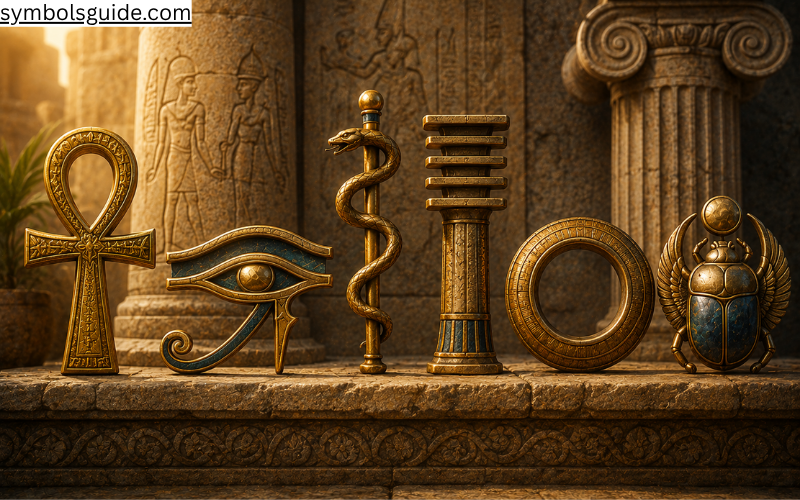
Ankh
Recognized by its looped cross design, the Ankh was one of Ancient Egypt’s most sacred symbols. It appeared in temples, tombs, and religious artwork where it was closely connected to life, vitality, and continued well-being.
Eye of Horus
After Horus regained his injured eye in Egyptian mythology, this emblem became linked with restoration, protection, and wholeness. It remains one of the most recognizable healing symbols from the ancient world.
Rod of Asclepius
A single serpent coiled around a staff forms the classic symbol of medicine. Named after the Greek god Asclepius, it continues to appear in healthcare organizations and medical institutions worldwide.
Caduceus
Featuring twin serpents and a pair of wings, the Caduceus originated in Greek mythology. Although often confused with the Rod of Asclepius, it developed its own connections to balance, health, and well-being.
Djed Pillar
Ancient Egyptians raised the Djed during important ceremonies as a sign of endurance and stability. Its stacked design became associated with strength during periods of recovery and renewal.
Shen Ring
Without a visible beginning or end, the Shen Ring represented eternity and preservation. Egyptian amulets frequently featured this circular symbol as a reminder of lasting protection.
Scarab
Inspired by the scarab beetle, this symbol became associated with regeneration and life’s continuous cycles. Small scarab amulets were widely used throughout Ancient Egypt.
Ouroboros
A serpent forming a circle by consuming its own tail created one of history’s most enduring symbols of renewal. Its endless shape reflects continuity, transformation, and cyclical healing.
Sun Cross
Among humanity’s oldest sacred symbols, the Sun Cross combines a circle with intersecting lines. Ancient cultures connected it with balance, natural rhythms, and life-giving energy.
Lotus
Emerging from muddy water before unfolding into a beautiful bloom, the lotus became a lasting image of renewal. Its story continues to inspire ideas of growth through adversity.
Tree of Life
Roots below and branches above give the Tree of Life its powerful visual meaning. Across countless cultures, it reflects connection, vitality, and the interconnected nature of existence.
Spiral
From prehistoric carvings to natural formations, spirals appear throughout human history. Their flowing shape reflects movement, development, and gradual transformation.
Triskelion
Three spirals radiating from a central point give the Triskelion its distinctive appearance. Celtic traditions often connected it with balance, progress, and life’s recurring cycles.
Celtic Knot
Continuous lines woven without a clear beginning or end helped make Celtic knots symbols of continuity and enduring connection. Their patterns remain popular in spiritual and healing artwork.
Triquetra
Three interlinked loops form the elegant design of the Triquetra. Celtic and Christian traditions both embraced this symbol as an expression of unity, harmony, and completeness.
Ancient Healing Symbols Overview
| Symbol | Traditional Association |
| Ankh | Life |
| Eye of Horus | Restoration |
| Rod of Asclepius | Medicine |
| Djed Pillar | Stability |
| Scarab | Renewal |
| Ouroboros | Transformation |
| Lotus | Growth |
| Tree of Life | Connection |
| Celtic Knot | Continuity |
| Triquetra | Harmony |
How We Selected These Healing Symbols
This collection focuses on symbols with documented connections to healing, restoration, protection, renewal, balance, medicine, spirituality, or well-being. Modern motivational icons and unsupported internet symbols were intentionally excluded to maintain historical and cultural accuracy.
Spiritual Healing Symbols
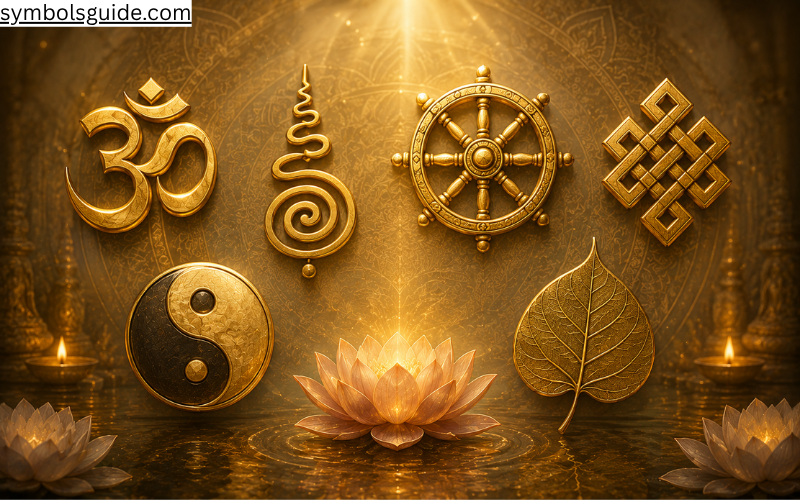
Om
Chanted for thousands of years across Hindu traditions, Om is regarded as a sacred sound connected to creation, inner balance, and spiritual awareness. Its symbol frequently appears in meditation and healing practices.
Unalome
A winding line that gradually straightens gives the Unalome its distinctive appearance. Buddhist traditions associate it with life’s challenges, personal growth, and the journey toward clarity.
Dharma Wheel
Eight spokes radiating from a central hub form the Dharma Wheel. This ancient Buddhist symbol reflects wisdom, guidance, and steady progress along a meaningful path.
Endless Knot
Interwoven lines without a beginning or end make the Endless Knot one of Tibetan Buddhism’s most recognizable symbols. It reflects interconnectedness, continuity, and lasting harmony.
Yin Yang
Few symbols communicate balance as clearly as Yin Yang. Originating in Chinese philosophy, it illustrates how complementary forces work together rather than oppose one another.
Sri Yantra
Layers of interlocking triangles create the intricate geometry of the Sri Yantra. Many spiritual traditions connect it with harmony, focus, and the alignment of mind, body, and spirit.
Mandala
Circular patterns arranged around a central point have made mandalas important tools for reflection and meditation. Their balanced designs are often associated with inner order and emotional well-being.
Enso Circle
Created with a single brushstroke in Zen Buddhism, the Enso Circle reflects acceptance, mindfulness, and completeness. Its simplicity carries a surprisingly deep spiritual meaning.
Bodhi Leaf
The heart-shaped Bodhi Leaf comes from the tree beneath which Buddha is believed to have attained enlightenment. It remains a symbol of wisdom, awareness, and personal transformation.
Medicine Wheel
Used by many Indigenous cultures across North America, the Medicine Wheel represents balance between the physical, emotional, mental, and spiritual aspects of life.
Spiritual Healing Symbols Overview
| Symbol | Common Association |
| Om | Inner Balance |
| Unalome | Personal Growth |
| Dharma Wheel | Guidance |
| Endless Knot | Continuity |
| Yin Yang | Harmony |
| Sri Yantra | Alignment |
| Mandala | Inner Order |
| Enso Circle | Mindfulness |
| Bodhi Leaf | Wisdom |
| Medicine Wheel | Holistic Wellness |
Sacred Geometry Healing Symbols
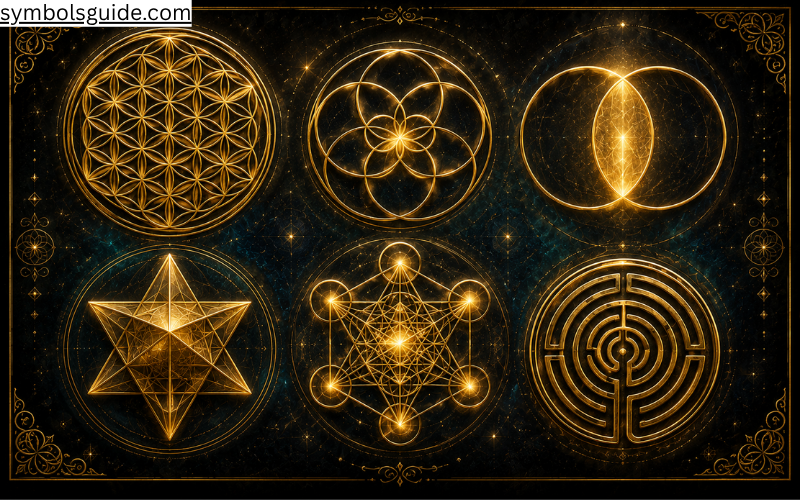
Flower of Life
Overlapping circles arranged in a repeating pattern create the Flower of Life. This ancient design appears in sacred sites worldwide and is often linked with harmony and interconnectedness.
Seed of Life
Seven circles combine to form one of sacred geometry’s foundational patterns. Because it represents beginnings, the Seed of Life is frequently associated with growth and renewal.
Vesica Piscis
Two intersecting circles produce the elegant shape known as the Vesica Piscis. Its form has appeared in religious art, spiritual traditions, and symbolic architecture for centuries.
Merkaba
Two interlocking tetrahedrons create the star-like structure of the Merkaba. Many modern spiritual traditions connect it with balance, transformation, and energetic alignment.
Metatron’s Cube
Intricate lines linking multiple geometric forms give Metatron’s Cube its distinctive appearance. It is often viewed as a representation of order and universal structure.
Labyrinth
Unlike a maze filled with dead ends, a labyrinth follows a single path toward its center. Ancient cultures used these designs for contemplation, reflection, and spiritual journeys.
Sacred Geometry Symbols Overview
| Symbol | Traditional Association |
| Flower of Life | Harmony |
| Seed of Life | New Beginnings |
| Vesica Piscis | Unity |
| Merkaba | Transformation |
| Metatron’s Cube | Order |
| Labyrinth | Reflection |
Reiki Healing Symbols
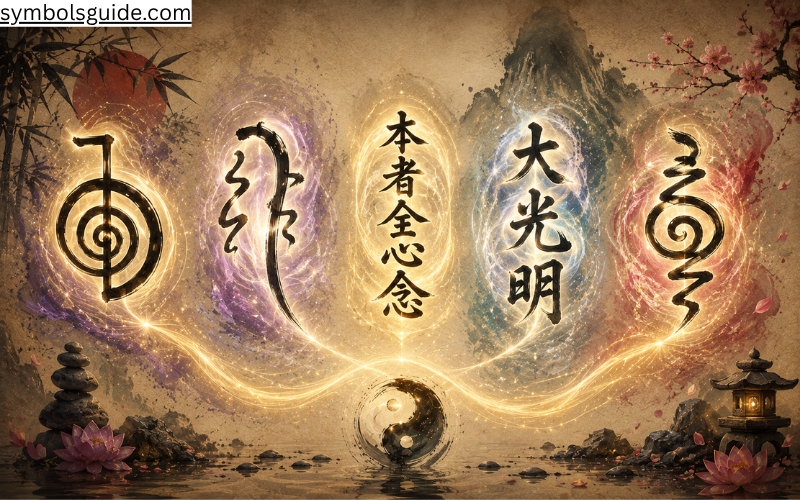
Cho Ku Rei
Known as the Power Symbol, Cho Ku Rei is among the most recognized Reiki symbols. Practitioners traditionally use it to focus and strengthen healing energy.
Sei He Ki
Flowing lines give Sei He Ki a unique appearance among Reiki symbols. It is commonly connected with emotional balance and mental well-being.
Hon Sha Ze Sho Nen
This symbol is traditionally used in distance Reiki practices. Its meaning centers on connection that extends beyond physical location.
Dai Ko Myo
Often called the Master Symbol, Dai Ko Myo occupies a special place within Reiki traditions. It is associated with spiritual awareness and deeper healing work.
Raku
Resembling a lightning bolt, Raku is frequently used during Reiki attunements. It is connected with grounding, release, and energetic integration.
Reiki Symbols at a Glance
| Symbol | Traditional Use |
| Cho Ku Rei | Energy Focus |
| Sei He Ki | Emotional Balance |
| Hon Sha Ze Sho Nen | Distance Healing |
| Dai Ko Myo | Spiritual Growth |
| Raku | Grounding |
Protection and Restoration Symbols
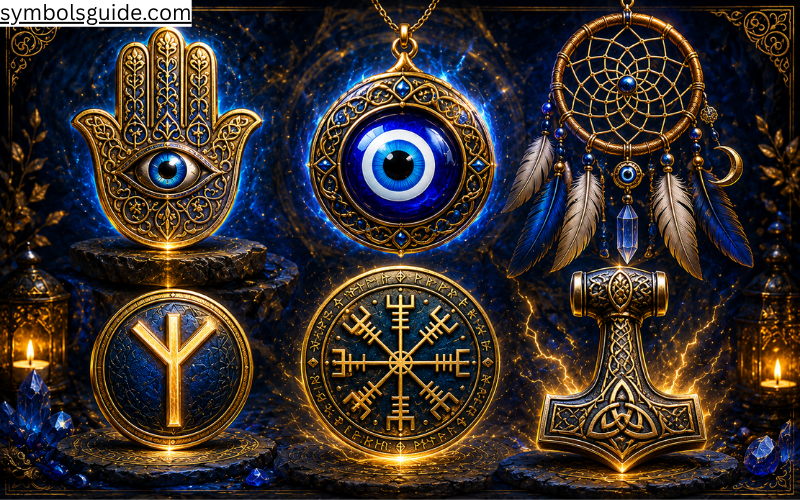
Across civilizations, protective symbols were often used on jewelry, homes, temples, clothing, and sacred objects. Many later became associated with healing because protection and well-being were viewed as closely connected.
Hamsa
An open palm with symmetrical fingers gives the Hamsa its distinctive appearance. For centuries, it has been carried as a symbol of blessings, protection, and overall well-being throughout the Middle East and North Africa.
Evil Eye
Blue eye-shaped amulets became popular across Mediterranean cultures as safeguards against envy and harmful intentions. Their enduring popularity has made the Evil Eye one of the world’s most recognized protective symbols.
Dreamcatcher
Woven into a circular frame, the Dreamcatcher originated within Ojibwe traditions. It is traditionally associated with filtering unwanted influences while allowing positive dreams to pass through.
Algiz Rune
Resembling an upward-reaching branch, Algiz stands out among ancient runes. Norse traditions connected it with defense, resilience, and spiritual safeguarding.
Aegishjalmur
Also known as the Helm of Awe, Aegishjalmur features a striking radial design. Icelandic traditions associated it with courage, protection, and inner strength during difficult circumstances.
Vegvisir
Often referred to as the Viking Compass, Vegvisir became linked with finding direction during uncertain journeys. Its symbolism later expanded to include guidance through life’s challenges.
Thor’s Hammer
Carried as an amulet by many Norse people, Thor’s Hammer represented security, blessing, and protection. Its connection to the thunder god strengthened its reputation as a powerful defensive symbol.
Nazar Amulet
The Nazar’s blue circular design became a familiar sight throughout Turkey, Greece, and neighboring regions. It is traditionally used as a protective charm against negative influences.
Jain Hand
An open hand containing a wheel forms the central image of this important Jain symbol. It reflects peace, mindfulness, and a commitment to nonviolence.
Sacred Heart
Radiant imagery surrounding a heart helped make the Sacred Heart a lasting symbol of compassion, devotion, and emotional restoration within Christian traditions.
Cross
Appearing in many forms throughout history, the Cross became widely associated with hope, renewal, and spiritual comfort. It remains one of the most recognized religious symbols worldwide.
Ichthys
Simple yet meaningful, the Ichthys fish symbol served as an identifying mark among early Christians. It later became associated with faith, perseverance, and encouragement.
Menorah
Seven branches rising from a central stem give the Menorah its unmistakable form. For thousands of years, it has represented wisdom, continuity, and spiritual illumination.
Protection and Healing Symbols Overview
| Symbol | Traditional Association |
| Hamsa | Blessings |
| Evil Eye | Protection |
| Dreamcatcher | Positive Dreams |
| Algiz Rune | Defense |
| Aegishjalmur | Courage |
| Vegvisir | Guidance |
| Thor’s Hammer | Security |
| Nazar Amulet | Safeguarding |
| Jain Hand | Peace |
| Sacred Heart | Compassion |
| Cross | Renewal |
| Ichthys | Faith |
| Menorah | Spiritual Light |
Nature Healing Symbols
Oak Tree
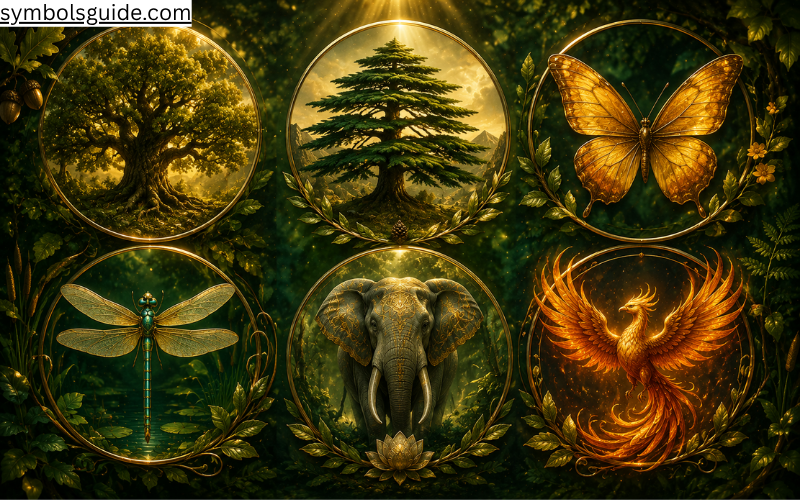
Few trees are admired for strength as much as the oak. Its deep roots and long lifespan helped establish it as a symbol of endurance and stability.
Willow Tree
Bending gracefully in strong winds, the willow became associated with recovery, adaptability, and emotional healing rather than rigid resistance.
Cedar of Lebanon
Ancient builders reserved cedar wood for temples and important structures. Its durability contributed to its reputation as a symbol of vitality and lasting strength.
Bamboo
Across Asia, bamboo earned admiration for remaining flexible without breaking. This quality made it a natural symbol of resilience and recovery.
Olive Branch
Offered as a sign of peace for centuries, the olive branch became associated with reconciliation, harmony, and restored relationships.
Fern
Thriving in shaded forests and difficult environments, ferns came to represent quiet growth and renewal in many folklore traditions.
Acorn
Despite its small size, an acorn contains the potential for tremendous growth. This transformation helped connect it with possibility and gradual healing.
Feather
Lightweight and graceful, feathers have long been associated with hope, guidance, and emotional release across many cultures.
Butterfly
A dramatic transformation from caterpillar to winged insect turned the butterfly into one of history’s strongest symbols of renewal and personal growth.
Dragonfly
Spending much of its life underwater before emerging into flight, the dragonfly reflects adaptation, change, and self-discovery.
Honeybee
Highly organized colonies helped make honeybees symbols of cooperation, productivity, and collective well-being.
Turtle
Protected by its shell and known for its longevity, the turtle became associated with patience, gradual progress, and long-term wellness.
Dolphin
Ancient sailors often viewed dolphins as signs of safety and good fortune. Their playful nature and strong social bonds helped establish connections with harmony, support, and emotional well-being.
Crane
Elegant movements and exceptional longevity earned the crane a respected place in East Asian traditions. It is frequently associated with vitality, peace, and enduring wellness.
Salmon
Swimming upstream despite immense obstacles turned the salmon into a symbol of perseverance. Its remarkable journey reflects determination, renewal, and resilience.
Stag
Each year, a stag sheds and regrows its antlers, creating a natural connection to regeneration and personal renewal. Its presence in folklore strengthened these associations.
Elephant
Large yet gentle, the elephant has long represented wisdom, stability, and emotional strength. Many cultures regard it as a symbol of steady progress and enduring well-being.
Bear
Seasonal hibernation helped link the bear with rest, recovery, and restoration. Indigenous traditions often viewed it as a source of strength and healing knowledge.
Wolf
Strong family bonds and cooperative behavior made the wolf a symbol of support, loyalty, and collective resilience. Its symbolism often emphasizes healing through connection.
Phoenix
No image captures renewal more dramatically than the phoenix rising from its ashes. For centuries, it has represented recovery, transformation, and new beginnings after hardship.
Nature Healing Symbols Overview
| Symbol | Traditional Association |
| Dolphin | Harmony |
| Crane | Vitality |
| Salmon | Perseverance |
| Stag | Regeneration |
| Elephant | Stability |
| Bear | Restoration |
| Wolf | Resilience |
| Phoenix | Rebirth |
Renewal and Recovery Symbols
Sunrise
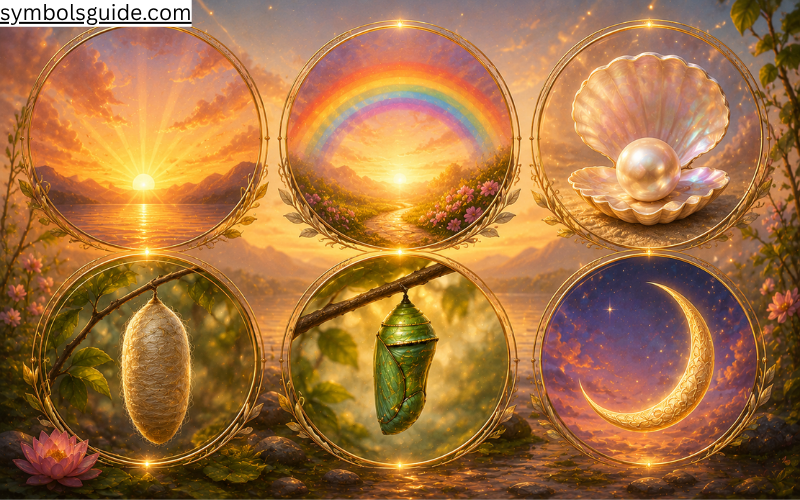
Each dawn signals a fresh beginning, making the sunrise a natural symbol of hope, recovery, and moving forward.
Rainbow
Appearing after storms, rainbows became powerful reminders that difficult periods eventually give way to brighter conditions.
Pearl
Created slowly within an oyster, pearls reflect beauty emerging through challenge. Their formation process inspired associations with growth and transformation.
Cocoon
Wrapped in protection while change occurs inside, the cocoon reflects healing that develops quietly before becoming visible.
Chrysalis
A chrysalis marks one of nature’s most remarkable transitions. This stage became closely associated with personal transformation and renewal.
Full Moon
Its complete form inspired symbolism related to reflection, fulfillment, and emotional balance across numerous traditions.
Crescent Moon
Unlike the Full Moon, the Crescent Moon reflects beginnings and gradual progress. Its shape often represents growth over time.
Spring Blossom
Blooming after winter’s dormancy, spring blossoms became symbols of recovery, renewal, and life’s ability to begin again.
Renewal Symbols Overview
| Symbol | Common Association |
| Sunrise | New Beginnings |
| Rainbow | Hope |
| Pearl | Transformation |
| Cocoon | Development |
| Chrysalis | Renewal |
| Full Moon | Reflection |
| Crescent Moon | Growth |
| Spring Blossom | Recovery |
Ancient Cultural Healing Symbols
Khanda
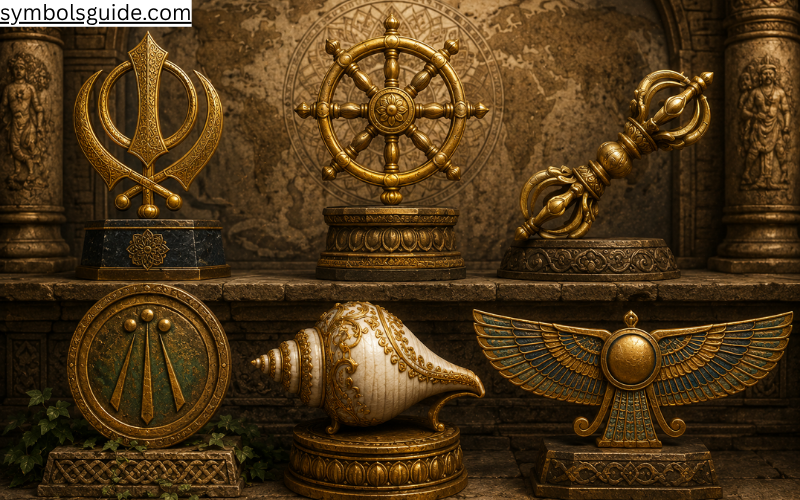
At the center of Sikh symbolism, the Khanda reflects spiritual balance, truth, and inner strength.
Dharmachakra
Known as the Wheel of Dharma, this Buddhist symbol represents wisdom, learning, and spiritual progress.
Cintamani Jewel
Ancient traditions describe the Cintamani as a wish-fulfilling jewel associated with compassion, fulfillment, and enlightenment.
Double Dorje
Four vajras joined around a central point create the Double Dorje. Tibetan traditions connect it with stability and spiritual strength.
White Tara Symbol
White Tara is widely associated with longevity, compassion, and restorative practices within Tibetan Buddhism.
Green Tara Lotus
Linked to protection and compassionate action, Green Tara’s lotus reflects growth, healing, and positive transformation.
Winged Sun
Combining solar imagery with outstretched wings, this ancient emblem became associated with vitality, protection, and divine power.
Awen
Three rays radiating upward form the Celtic symbol known as Awen. It is often connected with inspiration, harmony, and spiritual insight.
Conch Shell
Used in sacred ceremonies throughout Hindu and Buddhist traditions, the conch shell reflects purification and spiritual awakening.
Double Spiral
Ancient stone carvings featuring double spirals emphasized cycles of growth, renewal, and life’s continuous movement.
Blue Lotus
Highly valued in Ancient Egypt, the Blue Lotus became associated with awakening, rebirth, and personal transformation.
Healing Hand
Found in various healing traditions, the Healing Hand serves as a simple reminder of care, support, and restorative energy.
Cultural Healing Symbols Overview
| Symbol | Traditional Association |
| Khanda | Inner Strength |
| Dharmachakra | Wisdom |
| Cintamani Jewel | Fulfillment |
| Double Dorje | Stability |
| White Tara | Compassion |
| Green Tara Lotus | Healing |
| Winged Sun | Vitality |
| Awen | Inspiration |
| Conch Shell | Purification |
| Blue Lotus | Rebirth |
Healing Symbols in Tattoos
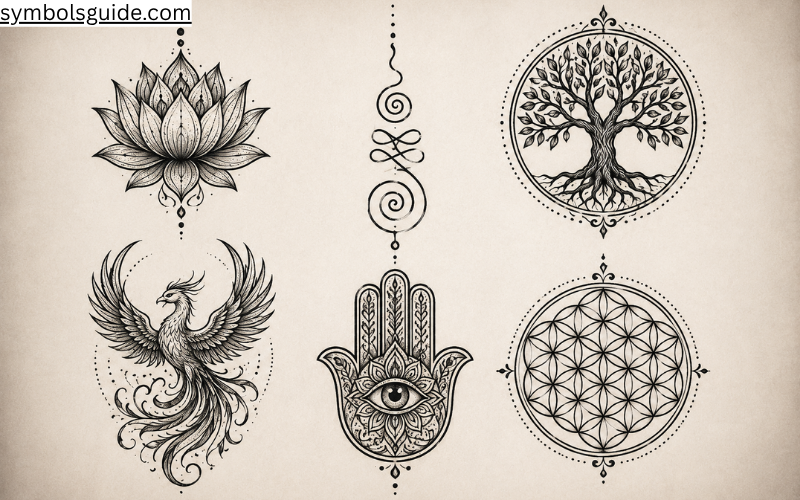
Healing symbols remain popular tattoo choices because they often represent recovery, transformation, resilience, and personal growth. Designs inspired by the Lotus, Unalome, Tree of Life, Phoenix, Hamsa, and Flower of Life are especially common among people marking important life experiences.
Some individuals choose healing tattoos to commemorate emotional healing, spiritual development, recovery from illness, or major life transitions. Others are drawn to these symbols because of their cultural, religious, or historical significance.
When selecting a healing symbol tattoo, it is worth exploring the symbol’s origin and traditional meaning to ensure the design aligns with the message you want it to represent.
Healing Symbols by Meaning
| Meaning | Symbol |
| Healing | Rod of Asclepius |
| Protection | Hamsa |
| Rebirth | Phoenix |
| Balance | Yin Yang |
| Growth | Lotus |
| Renewal | Butterfly |
| Wisdom | Bodhi Leaf |
| Recovery | Sunrise |
See Also
- 67+ Historic Anti-Fascist Resistance Symbols and Meanings
- 75+ Essential Calculus Symbols and Meanings Explained
- Unbreakable Friendship Symbols and Meanings: 101+ Signs
- 77+ Autumn Symbols: Meanings, Myths & Traditions
- 72+ Timeless Leadership Symbols From Royalty and History
FAQs
What is the most powerful healing symbol?
The Ankh, Lotus, Tree of Life, Rod of Asclepius, and Hamsa are among the most recognized healing symbols because of their long history and widespread cultural influence.
What is the universal symbol for healing?
The Rod of Asclepius is widely considered the universal symbol of healing due to its strong connection with medicine and healthcare.
Which symbol represents emotional healing?
Sei He Ki, Yin Yang, Mandala, and Unalome are commonly associated with emotional balance and personal growth.
What symbol represents recovery and rebirth?
The Phoenix is one of the strongest symbols connected with transformation, recovery, and renewal after adversity.
What are Reiki healing symbols?
Cho Ku Rei, Sei He Ki, Hon Sha Ze Sho Nen, Dai Ko Myo, and Raku are the primary symbols used within Reiki traditions.
Which healing symbols are popular for tattoos?
Popular healing symbol tattoos include the Lotus, Tree of Life, Unalome, Phoenix, Hamsa, and Flower of Life.
What ancient symbol represents healing?
The Ankh, Eye of Horus, Rod of Asclepius, and Djed Pillar are among the oldest symbols associated with healing and restoration.
Why do people use healing symbols?
Many people use healing symbols as reminders of recovery, balance, resilience, protection, hope, and spiritual well-being.
Conclusion
Healing symbols have appeared in ancient civilizations, spiritual traditions, sacred geometry, mythology, and nature for thousands of years. Although their origins differ, many share themes of renewal, restoration, protection, balance, and growth.
From the Ankh and Eye of Horus to the Lotus, Tree of Life, Hamsa, and Phoenix, these enduring symbols continue to inspire people seeking strength, healing, and transformation. Their lasting presence across cultures highlights humanity’s universal desire for wellness, resilience, and renewal.