Holy Thursday symbols and meanings represent the sacred events of the Last Supper, the institution of the Eucharist, Christ’s washing of the disciples’ feet, and the beginning of His Passion. Also known as Maundy Thursday, this important day in Holy Week is rich with symbols that teach lessons about humility, service, sacrifice, priesthood, and divine love. Common Catholic Holy Thursday symbols include bread, wine, the chalice, basin, towel, altar, tabernacle, holy oils, and the Garden of Gethsemane. These symbols help Christians better understand the spiritual significance of Christ’s final meal with His disciples and the events leading to Good Friday. By exploring Holy Thursday symbols and their meanings, believers gain a deeper appreciation for the traditions, teachings, and sacred mysteries celebrated during this holy season.
Holy Thursday symbols and meanings reveal the rich spiritual traditions behind one of Christianity’s most sacred observances. Celebrated on the Thursday before Easter, Holy Thursday—often called Maundy Thursday—commemorates the Last Supper, the institution of the Eucharist, Christ’s commandment to love one another, and His humble act of washing the disciples’ feet.
For centuries, churches have used visual symbols, liturgical objects, sacred colors, and biblical imagery to help believers reflect on these events. Many Catholic Holy Thursday symbols are directly connected to the Eucharist, priesthood, service, sacrifice, and the beginning of Christ’s Passion. Others come from the Garden of Gethsemane, Eucharistic adoration traditions, and ancient Holy Week ceremonies that continue to be observed around the world.
What makes Holy Thursday unique is that it combines celebration and sorrow. Christians remember Christ’s gift of the Eucharist while also preparing for the suffering that follows on Good Friday. This combination has produced a remarkable collection of symbols that carry deep theological, historical, and spiritual meaning.
Holy Thursday also marks the institution of the priesthood, making it one of the most significant celebrations in the Catholic liturgical calendar. During the Mass of the Lord’s Supper, believers remember how Jesus shared bread and wine with His disciples and instructed them to continue this sacred remembrance.
Another important aspect of Maundy Thursday is the tradition of Eucharistic adoration. After Mass, many churches transfer the Blessed Sacrament to an Altar of Repose, where worshippers spend time in prayer, reflecting on Christ’s agony in the Garden of Gethsemane.
Because Holy Thursday combines themes of communion, service, sacrifice, covenant, priesthood, and prayer, it has inspired a wide variety of symbols that remain important in churches around the world today.
Related Post: Symbols of Rebirth
Holy Thursday Symbols Quick Reference
| Symbol | Primary Meaning |
| Bread | Body of Christ |
| Wine | Blood of Christ |
| Chalice | Eucharistic sacrifice |
| Basin | Humility and service |
| Towel | Servant leadership |
| Altar | Sacred sacrifice |
| Tabernacle | Christ’s presence |
| Holy Oils | Consecration |
| Gethsemane | Prayer and surrender |
| Cross | Approaching Passion |
Last Supper Symbols and Meanings
| Symbol | Meaning |
| Bread | Institution of the Eucharist |
| Wine | New Covenant |
| Table | Fellowship |
| Chalice | Sacrifice |
| Apostles | Foundation of the Church |
| Passover Meal | Fulfillment of prophecy |
Eucharistic Symbols of Holy Thursday
| Symbol | Meaning |
| Host | Real Presence |
| Monstrance | Adoration |
| Ciborium | Eucharistic reverence |
| Tabernacle | Reserved Sacrament |
| Paten | Sacred offering |
| Sanctuary Lamp | Presence of Christ |
Foot Washing Symbols
| Symbol | Meaning |
| Basin | Humility |
| Water | Cleansing |
| Towel | Service |
| Bare Feet | Vulnerability |
| Mandatum Ceremony | Christ’s commandment |
| Washing Vessel | Servant leadership |
Catholic Liturgical Symbols of Holy Thursday
| Symbol | Meaning |
| White Vestments | Joy and purity |
| Holy Oils | Priesthood |
| Chrism | Consecration |
| Altar of Repose | Eucharistic devotion |
| Processional Cross | Christ’s journey |
| Incense | Prayer rising to God |
Symbols of the Passion Transition
| Symbol | Meaning |
| Garden of Gethsemane | Prayer |
| Olive Tree | Endurance |
| Silver Coins | Betrayal |
| Lantern | Arrest |
| Rope | Captivity |
| Crown of Thorns | Coming suffering |
100+ Holy Thursday Symbols and Meanings with Names
1. Bread
Bread is connected with the Body of Christ and recalls the sacred meal Jesus shared with His disciples during the Last Supper.
2. Wine
Wine is associated with the New Covenant and Christ’s sacrificial love shared through the Eucharist.
3. Chalice
The chalice is linked with the sacred cup used during the Last Supper and the celebration of the Eucharist.
4. Eucharistic Host
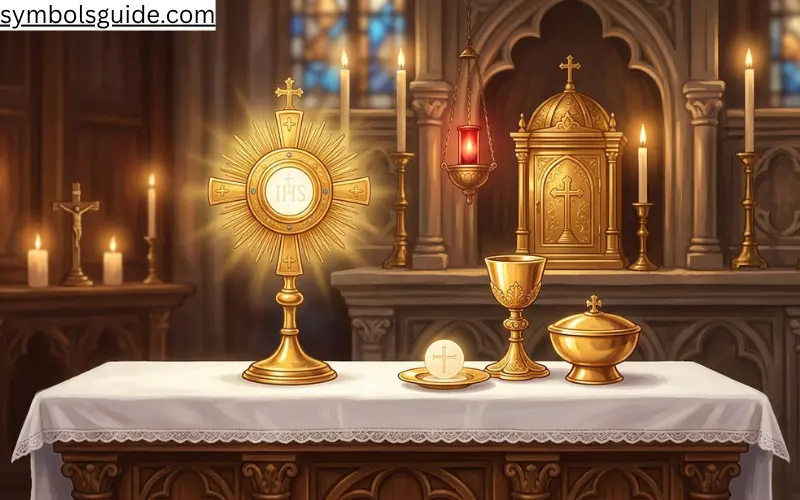
The Eucharistic Host represents Christ’s real presence and stands at the heart of Catholic Holy Thursday worship.
5. Wheat
Wheat is closely connected with nourishment, provision, and the bread used in Eucharistic worship.
6. Grapes
Grapes represent the source of sacramental wine and remind believers of Christ’s redemptive sacrifice.
7. Last Supper Table
The Last Supper table symbolizes fellowship, covenant, and Christ’s final meal with His disciples.
8 Lavabo Bowl
The Lavabo Bowl symbolizes the ceremonial basin used by the priest for ritual hand washing before the Eucharistic celebration.
9 Lavabo Towel
The Lavabo Towel symbolizes purity, preparation, and reverence during the sacred liturgy of Holy Thursday.
10. Twelve Apostles
The Twelve Apostles symbolize the foundation of the Church and the witnesses present at the Last Supper.
11. Passover Meal
The Passover meal connects Holy Thursday to ancient Jewish traditions fulfilled through Christ.
12. Unleavened Bread
Unleavened bread symbolizes purity and recalls the Passover meal celebrated before Christ’s Passion.
13 Lavabo Ritual
The Lavabo Ritual represents spiritual cleansing and readiness to celebrate the Eucharist worthily.
14. Reserved Eucharistic Vessel
The Reserved Eucharistic Vessel symbolizes the sacred container used to carry or reserve the Blessed Sacrament after Holy Thursday Mass.
15 Eucharistic Reservation Altar
The Eucharistic Reservation Altar symbolizes the temporary resting place of the Blessed Sacrament after Holy Thursday Mass.
16. Basin
The basin is remembered for Christ’s act of washing the disciples’ feet and teaching humble service.
17. Water
Water symbolizes cleansing, renewal, and the spiritual lessons taught through foot washing.
18. Towel
The towel is associated with servant leadership and Christ’s example of caring for others.
19. Foot Washing
Foot washing symbolizes humility, love, and the call to serve others.
20. Washing Vessel
The washing vessel recalls Christ’s act of caring for His disciples through service.
21. Bare Feet
Bare feet symbolize vulnerability, humility, and the receiving of Christ’s care.
22. Mandatum Ceremony
The Mandatum Ceremony commemorates Christ’s commandment to love one another through acts of service.
23. Apron of Service
The apron symbolizes Christ taking the role of a servant despite being Lord and Teacher.
24. Altar Candlestick
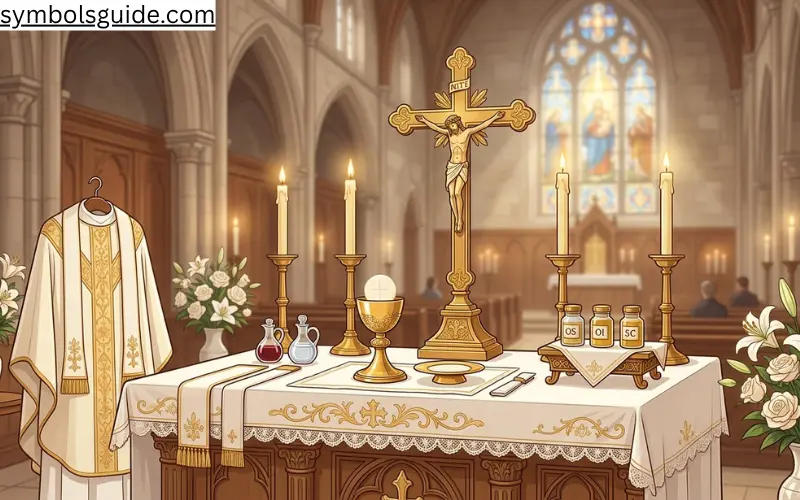
Altar Candlestick symbolizes prayer, reverence, and Christ as the Light of the World during Holy Thursday worship.
25. White Vestments
White vestments are linked with purity, celebration, and the joyful remembrance of the Eucharist.
26. Holy Oils
Holy Oils represent consecration, blessing, healing, and sacramental ministry.
27. Sacred Chrism
Sacred Chrism symbolizes the Holy Spirit’s work in consecration and mission.
28. Priest’s Stole
The stole symbolizes ordained ministry and service within the Church.
29. Chasuble
The chasuble represents charity and the priestly role during liturgical worship.
30. Altar
The altar serves as the central place of worship where the Eucharistic celebration takes place.
31. Altar Cloth
The altar cloth symbolizes reverence and preparation for holy mysteries.
32. Sacred Linen
Sacred linen represents purity and respect for the Eucharist.
33. Corporal
The corporal is the sacred cloth upon which the Eucharistic gifts are placed during Mass.
34. Paten
The paten symbolizes the sacred vessel that holds the Eucharistic bread.
35. Ciborium
The ciborium represents reverence for the Blessed Sacrament and Eucharistic reservation.
36. Cruets
Cruets symbolize the preparation of bread and wine before consecration.
37. Tabernacle
The tabernacle is associated with Christ’s continuing presence among His people.
38. Sanctuary Lamp
The sanctuary lamp signifies the presence of the Blessed Sacrament.
39. Monstrance
The monstrance symbolizes Eucharistic adoration and devotion to Christ’s presence.
40. Altar of Repose
The Altar of Repose symbolizes Christ’s journey to Gethsemane and serves as a place of Eucharistic prayer after Mass.
41. Garden of Gethsemane
The Garden of Gethsemane is connected with prayer, surrender, and Christ’s acceptance of the Father’s will.
42. Olive Tree
The olive tree represents endurance, peace, spiritual strength, and the setting where Jesus prayed before His Passion.
43. Holy Thursday Throne
The Holy Thursday Throne symbolizes the honored place prepared for Eucharistic adoration after the Mass of the Lord’s Supper.
44. Prayer Rock
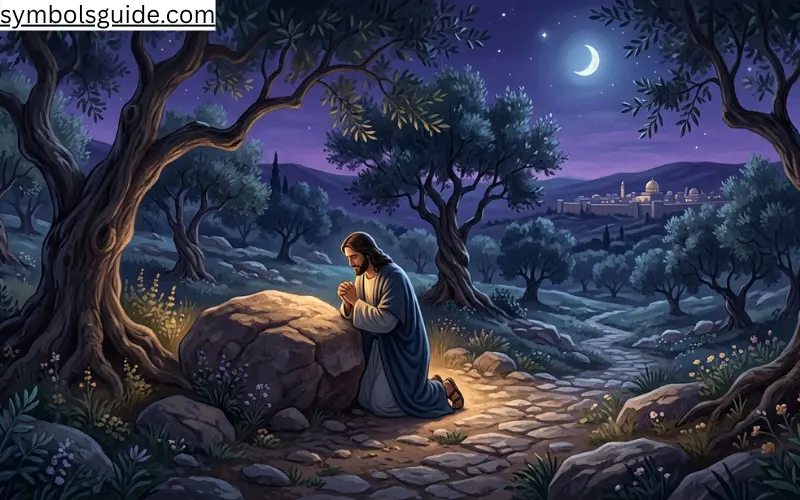
The prayer rock represents Christ’s deep anguish and faithful communion with God in Gethsemane.
45. Night Vigil
The night vigil symbolizes watchfulness and remaining spiritually awake with Christ in prayer.
46. Reserved Eucharistic Pyx
The Reserved Eucharistic Pyx symbolizes the secure reservation and protection of the Blessed Sacrament.
47. Kneeling Christ
The image of Christ kneeling symbolizes obedience, surrender, and trust in God’s plan.
48. Angel in Gethsemane
The angel symbolizes divine comfort and strength given to Christ during His agony.
49. Sleeping Disciples
The sleeping disciples symbolize human weakness and the struggle to remain faithful during difficult times.
50. Gethsemane Olive Press
The Gethsemane Olive Press symbolizes spiritual pressure, sacrifice, and Christ’s suffering before His arrest.
51. Eucharistic Adoration
Eucharistic adoration symbolizes devotion to Christ’s real presence in the Blessed Sacrament.
52. Sanctuary Veil
The Sanctuary Veil symbolizes reverence, mystery, and the sacredness of Christ’s Eucharistic presence.
53. Eucharistic Procession
The procession symbolizes reverence and public devotion toward the Blessed Sacrament.
54. Processional Canopy
The canopy symbolizes honor and reverence shown to Christ during Eucharistic processions.
55. Incense
Incense is traditionally associated with prayer, worship, and reverence offered to God.
56. Thurible
The thurible represents the ceremonial offering of incense during sacred liturgy.
57. Incense Boat
The incense boat symbolizes preparation for worship and sacred ritual.
58. Benediction Veil
The Benediction Veil symbolizes reverence when handling the Blessed Sacrament.
59. Humeral Veil
The humeral veil represents honor and devotion shown to Christ present in the Eucharist.
60. Processional Lantern
The Processional Lantern symbolizes guidance, vigilance, and participation in Holy Thursday processions and ceremonies.
61. Silver Coins
The silver coins are remembered as the payment connected with Judas’ betrayal of Jesus.
62. Judas’ Kiss
Judas’ kiss symbolizes betrayal disguised as friendship and loyalty.
63. Lantern
The lantern symbolizes the search party that came to arrest Jesus in Gethsemane.
64. Torch
The torch represents the darkness surrounding Christ’s arrest and the unfolding Passion.
65. Rope
The rope symbolizes Christ being bound and taken into custody.
66. Chains
The chains represent captivity and the suffering willingly accepted by Jesus.
67. Arresting Soldiers
The soldiers symbolize the beginning of Christ’s trial and suffering.
68. Temple Guards
Temple guards symbolize the religious authorities involved in Christ’s arrest.
69. Sword of Peter
Peter’s sword symbolizes human impulsiveness and the misunderstanding of Christ’s mission.
70. Severed Ear of Malchus
This symbol represents Christ’s mercy and healing even in the midst of conflict.
71. Stripped Altar
The stripped altar marks the transition from celebration toward the solemn events of Good Friday.
72. Empty Sanctuary
The empty sanctuary reflects the solemnity and grief associated with Christ’s suffering.
73. Silent Bells
Silent bells symbolize mourning and the approaching remembrance of Christ’s death.
74. Silent Organ
The silent organ represents reflection and restraint during the most solemn days of Holy Week.
75. Extinguished Candles
Extinguished candles symbolize the growing darkness surrounding Christ’s Passion.
76. Processional Cross
The processional cross symbolizes Christ leading believers toward redemption.
77. Sanctuary Cross
The sanctuary cross reminds worshippers of the sacrifice soon to be remembered on Good Friday.
78. Crown of Thorns
The crown of thorns is associated with suffering, sacrifice, and Christ’s humility.
79. Passion Cross
The Passion Cross symbolizes the suffering Christ willingly embraced for humanity’s salvation.
80. Agony in the Garden Image
This image symbolizes prayer, obedience, suffering, and trust in God’s will.
81. Holy Thursday Procession
The Holy Thursday procession symbolizes the Church accompanying Christ from the Last Supper to Gethsemane through prayer and devotion.
82. Reservation Chapel
The Reservation Chapel symbolizes the temporary place where the Blessed Sacrament is reserved after Mass.
83. Eucharistic Chapel
The Eucharistic Chapel represents silent prayer, adoration, and reflection on Christ’s presence.
84. Watch Before the Blessed Sacrament
This symbol represents the tradition of remaining with Christ in prayer after the Holy Thursday liturgy.
85. Holy Thursday Banner
The Holy Thursday Banner symbolizes remembrance of the Last Supper and the themes of service, Eucharist, and devotion.
86. Adoration Kneeler
The kneeler symbolizes humility and reverence before the Blessed Sacrament.
87. Prayer Vigil Candle
The vigil candle represents spiritual watchfulness during Holy Thursday night prayers.
88.Paschal Preparation Vessel
The Paschal Preparation Vessel symbolizes readiness for the sacred observances leading from Holy Thursday into Easter.
89. Communion Rail
The Communion Rail symbolizes reverence and preparation for receiving the Eucharist.
90. Foot Washing Stool
The Foot Washing Stool symbolizes humility and Christ’s example of servant leadership during the Mandatum ceremony.
91. Institution of the Eucharist Icon
This icon represents Christ establishing the sacrament of Holy Communion during the Last Supper.
92. Last Supper Mural
The Last Supper mural symbolizes Christian fellowship, covenant, and Eucharistic faith.
93. Apostle Sandals
Apostle Sandals symbolize the disciples whose feet Jesus washed as an act of humility and love.
94. Maundy Thursday Icon
The Maundy Thursday Icon symbolizes the Last Supper, foot washing, and Christ’s commandment of love.
95. Chrism Mass Vessel
The Chrism Mass Vessel symbolizes the sacred container used for the blessing and distribution of holy oils during Holy Week.
96. Sacred Reservation Vessel
This vessel symbolizes care and reverence for the Blessed Sacrament after Holy Thursday Mass.
97. Chrism Mass Symbols
These symbols represent the blessing of oils and the unity of bishops, priests, and faithful.
98. Oil Stock
The oil stock symbolizes healing, consecration, and sacramental ministry within the Church.
99. Bishop’s Chair
The bishop’s chair symbolizes apostolic leadership and ecclesiastical authority.
100. Priesthood Emblem
The priesthood emblem symbolizes the institution and continuation of ordained ministry.
101. Ordination Hands
Ordination hands symbolize the passing of spiritual authority and priestly service.
102. Sacred Heart of Jesus
The Sacred Heart is linked with Christ’s compassion, mercy, and self-giving love.
103. Lamb of God
The Lamb of God symbolizes Jesus as the sacrificial offering for humanity’s redemption.
104. Paschal Lamb
The Paschal Lamb connects the Last Supper to the Passover and Christ’s saving sacrifice.
105. Passover Cup
The Passover Cup symbolizes continuity between Jewish tradition and the New Covenant.
106. Bitter Herbs
Bitter herbs symbolize suffering and foreshadow the hardships of Christ’s Passion.
107. Upper Room
The Upper Room symbolizes fellowship, worship, and the institution of the Eucharist.
108. Eucharistic Covenant Seal
This symbol represents the everlasting covenant established through Christ’s sacrifice.
109. Mandatum Gospel
The Mandatum Gospel symbolizes Christ’s commandment of love and humble service.
110. New Commandment Scroll
The New Commandment Scroll symbolizes Jesus’ instruction to love one another as He loved His disciples.
Most Important Holy Thursday Symbols
| Symbol | Why It Matters |
| Bread | Eucharist |
| Wine | New Covenant |
| Chalice | Last Supper |
| Basin | Foot Washing |
| Towel | Service |
| Altar | Worship |
| Host | Real Presence |
| Gethsemane | Prayer |
| Holy Oils | Priesthood |
| Altar of Repose | Adoration |
Major Categories of Holy Thursday Symbols
| Category | Examples |
| Eucharistic Symbols | Bread, Wine, Chalice |
| Service Symbols | Basin, Towel, Foot Washing |
| Priesthood Symbols | Stole, Chrism, Holy Oils |
| Gethsemane Symbols | Olive Tree, Prayer Rock |
| Passion Symbols | Rope, Lantern, Silver Coins |
| Liturgical Symbols | Monstrance, Tabernacle, Altar |
Why Holy Thursday Symbols Matter
Holy Thursday symbols do more than decorate churches or illustrate biblical events. They help believers understand profound spiritual truths through visible reminders of Christ’s actions and teachings.
The symbols of bread, wine, basin, towel, and altar connect worshippers directly to the Last Supper. Symbols associated with Gethsemane, such as the olive tree, prayer rock, and night vigil, remind Christians of Christ’s obedience and sacrifice. Eucharistic symbols like the monstrance, ciborium, and tabernacle reinforce the importance of Christ’s presence within the Church.
Together, these symbols transform historical events into living lessons about faith, humility, service, and redemption.
Most Important Holy Thursday Symbols at a Glance
While Holy Thursday includes many meaningful symbols, a few stand out because they are closely connected to the Last Supper, the Eucharist, and Christ’s act of serving His disciples.
The table below highlights some of the most recognized Holy Thursday symbols and the role they play in Christian tradition.
| Holy Thursday Symbol | Meaning |
| Bread | Remembers Christ’s Body and the institution of the Eucharist |
| Wine | Recalls the New Covenant established through Christ |
| Chalice | The sacred cup used during the Last Supper |
| Basin | Christ’s example of humility through foot washing |
| Towel | Service, compassion, and caring for others |
| Altar | The center of Eucharistic worship |
| Host | Christ’s presence in the Eucharist |
| Garden of Gethsemane | Prayer, surrender, and preparation for sacrifice |
| Holy Oils | Consecration, healing, and priestly ministry |
| Altar of Repose | Eucharistic adoration after the Holy Thursday Mass |
These symbols help believers remember the key events of Holy Thursday and the spiritual lessons connected with faith, humility, service, and devotion.
Catholic Holy Thursday Symbols and Traditions
| Symbol | Catholic Significance |
| Altar of Repose | Place of Eucharistic prayer after Mass |
| Monstrance | Eucharistic adoration |
| Holy Oils | Consecration and sacramental ministry |
| Basin and Towel | Washing of the feet ceremony |
| Reserved Host | Christ’s presence for Good Friday |
| White Vestments | Joyful celebration of the Eucharist |
| Tabernacle | Sacred Eucharistic reservation |
| Chrism Mass Symbols | Unity of the Church |
These traditions remain central to Catholic Holy Thursday celebrations throughout the world and continue to connect believers with centuries of liturgical heritage.
Why Churches Still Use Holy Thursday Symbols Today
One reason Holy Thursday symbols remain important is their ability to teach complex spiritual ideas in a visual and memorable way. Even people unfamiliar with theology can understand lessons of service through a basin and towel or recognize sacrifice through the bread and wine of the Eucharist.
Churches continue using these symbols because they connect modern believers with biblical history, Christian tradition, and liturgical worship. They also help younger generations learn the meaning of Holy Week through tangible objects and ceremonies rather than abstract concepts alone.
From Catholic cathedrals and Orthodox churches to Protestant congregations, Holy Thursday symbols remain powerful tools for worship, education, and spiritual reflection.
See Also
- 101+ Genogram Symbols and Meanings: Complete Guide
- 108+ Geometry Symbols and Meanings with Names Guide
- 116+ Halloween Symbols and Meanings Explained
- 106+ Inequalities Symbols and Meanings Explained
- 103+Symbols of Rebirth and Renewal with Meanings
FAQs
What is the most important Holy Thursday symbol?
Bread and wine are generally considered the most important Holy Thursday symbols because they represent the Eucharist established during the Last Supper.
Why is a basin used on Holy Thursday?
The basin symbolizes Christ washing the disciples’ feet and teaching humility, service, and love.
What does the chalice represent?
The chalice represents the cup used by Jesus during the Last Supper and symbolizes the New Covenant.
Why is Holy Thursday called Maundy Thursday?
The word “Maundy” comes from the Latin word mandatum, meaning commandment, referring to Christ’s command to love one another.
What is the Altar of Repose?
The Altar of Repose is a special area where the Blessed Sacrament is placed for prayer and adoration after Holy Thursday Mass.
Why are church bells silenced after Holy Thursday?
The silence of the bells symbolizes mourning and prepares believers for the solemn observances of Good Friday.
What does the Garden of Gethsemane symbolize?
Gethsemane symbolizes prayer, surrender, obedience, and Christ’s acceptance of the Father’s will.
What are Catholic Holy Thursday symbols?
Catholic Holy Thursday symbols include the chalice, host, basin, towel, holy oils, altar of repose, monstrance, tabernacle, and Altar of Repose.
Why is Eucharistic adoration important on Holy Thursday?
It allows believers to spend time in prayer with Christ and remember His agony in Gethsemane.
How many symbols are associated with Holy Thursday?
There is no official number, but Christian traditions, liturgical practices, and biblical events provide more than 100 recognized Holy Thursday symbols and symbolic elements.
What do Holy Thursday symbols teach Christians?
Holy Thursday symbols teach humility, sacrifice, service, prayer, and devotion to Christ.
Why is the Eucharist central to Holy Thursday?
Because Christians believe Jesus instituted the Eucharist during the Last Supper.
What is the significance of the Altar of Repose?
It provides a place for prayer and Eucharistic adoration after Holy Thursday Mass.
Which Holy Thursday symbol represents humility?
The basin and towel are the strongest symbols of humility and servant leadership.
Why are Holy Thursday symbols important today?
They help believers connect modern worship with the biblical events of Holy Week.
Conclusion
Holy Thursday is more than a date on the Christian calendar.
It is a day filled with reminders of faith, humility, service, sacrifice, and love.
From the bread and wine of the Last Supper to the basin and towel used during the washing of feet, every symbol points toward an important lesson Christ shared with His followers.
Some symbols highlight the gift of the Eucharist.
Others focus on prayer, devotion, obedience, or servant leadership.
Together, they help believers reflect on the events that lead from the Upper Room to the Cross and ultimately to Easter morning.
That is why Holy Thursday symbols continue to remain meaningful across generations, churches, and cultures throughout the world.